


.png)
- Apr 17
- 6 min read
BY HAKI KWELI SHAKUR
Originally published in Iansá Mag
a hidden system of forced removal
across the united states, thousands of new afrikan (black) prisoners many of them political prisoners, prisoners of war, jailhouse lawyers, organizers, and politicized prisoners are forcibly transferred across state lines under what is known as the interstate compact contract agreement (icca).
framed as an administrative or “security” measure, this system functions in practice as modern-day human trafficking, domestic exile, and a direct continuation of the plantation slavery model used against enslaved afrikans and slave rebels.
like the 18th century domestic slave trade of the upper south states e.g. virginia to the deeper south states before it, the icca is designed not merely to punish individuals, but to disrupt families, sever community ties, break resistance, extract labor, and isolate those deemed politically dangerous. it is a system that must be named clearly, historically situated, and ultimately abolished.
what is the interstate compact contract agreement?
the interstate compact contract agreement allows u.s. states to transfer prisoners to facilities in other states, often hundreds or thousands of miles away from their homes, families, legal counsel, and support networks. these transfers are frequently:
involuntary
indefinite
unchallengeable
disproportionately applied to black prisoners
under the icca, human beings are effectively leased between state prison systems, echoing earlier forms of slave leasing, convict leasing, and interstate slave trading.
new afrikan prisoners are treated not as people with rights, but as commodities units of labor, bodies to fill beds, and sources of federal and state revenue.
from the slave coffle to the prison bus: historical continuity
interstate slave trading
before the civil war, enslaved afrikans were routinely sold and transported across state lines from virginia, maryland, and the carolinas to alabama, mississippi, louisiana, and texas. this internal slave trade:
destroyed families
punished rebellion and resistance
fed expanding plantation economies
functioned as a form of forced exile
the icca mirrors this system almost exactly.
today’s prison buses and airplanes replace slave coffles and ships, but the logic remains the same:
remove the rebellious, profitable, or surplus black body from its community and relocate it for control and extraction.
political prisoners and counterinsurgency
historically, enslaved afrikans who organized revolts, ran away, or inspired resistance were:
sold “down south”
separated from kin
placed under harsher conditions
targeted for exemplary punishment
sold or traded out of the u.s. to caribbean countries
in the modern era, new afrikan political prisoners those connected to black liberation and nationalist movements, prison organizing, or resistance to state violence are disproportionately subjected to interstate transfers.
this is not incidental. it is counterinsurgency.
the icca allows prison administrations to:
break organizing networks
remove jailhouse lawyers
silence whistleblowers
isolate revolutionary thinkers
undermine collective resistance
this mirrors the treatment of maroons, rebel leaders, and so called “troublesome” enslaved people under plantation slavery.
forced labor and economic extraction
once transferred, prisoners are often forced into:
prison labor programs
private prison contracts
underpaid or unpaid work benefiting the state and corporations
like slavery, the icca enables labor extraction without consent, while denying new afrikan prisoners proximity to family visits, cultural grounding, or community accountability.
this is economic exploitation through captivity, no different in principle from the plantation economy.
family separation as a weapon
one of the most devastating effects of interstate transfers is family separation.
families cannot afford long-distance travel
communication is restricted and costly
elders and children are cut off
cultural and community ties are deliberately weakened
this mirrors the intentional family destruction practiced under chattel slavery, where separation was used to discipline, terrorize, and control the enslaved new afrikan populations.
exile as punishment
for new afrikan prisoners and other prisoners, icca transfers function as internal exile, a punishment historically reserved for political dissidents, rebels, and colonized peoples.
to be forcibly removed from one’s land, people, and nation is a political act.
it is especially significant when applied to a people who have never consented to u.s. captivity, from slavery to jim crow to mass incarceration.
case studies of icca as political exile and retaliation
case study: assata shakur

assata shakur, a former member of the black panther party and black liberation army, new afrikan citizen was subjected to:
brutal imprisonment
constant surveillance
repeated transfers
extreme isolation
her incarceration followed the classic counterinsurgency model: criminalize political resistance, isolate the revolutionary, and make an example.
as assata once stated about the icca:
i was sent to a prison within a prison in augustine, west virginia: a federal prison for women, and it was the opposite of every prison i’ve ever been in. because i was the only black woman there. i thought this was really weird. this prison was for the most “dangerous women” in the united states.
but luckily that place was closed down, all of the rest of the women were released to the general population or sent to other prisons in the united states i was thrown in the hole until nj decided what they were going to do to me, since i had no state charges whatsoever, i was sent there under an agreement which is called the (interstate compact agreement) which allows any state penal system to ship any body to any prison system in the united states, and what that means in terms of political prisoners is they can ship you as far away from your family, supporters, etc as possible, and that is what they do.
other examples are as followed:
shaka shakur

shaka shakur, a new afrikan political prisoner has endured interstate transfers, isolation, and retaliatory punishment directly tied to political consciousness and resistance inside prison.
his experience includes:
transfers far from his base of support
retaliation for political education and organizing
suppression of communication and association
like enslaved afrikans sold away for “insubordination,” shaka shakur’s transfers functioned to:
break collective resistance
disrupt political continuity
send a message to others inside
the icca allows such repression to occur without public scrutiny, cloaked in administrative language while serving the same purpose as plantation discipline.
kevin “rashid” johnson: icca as open retaliation
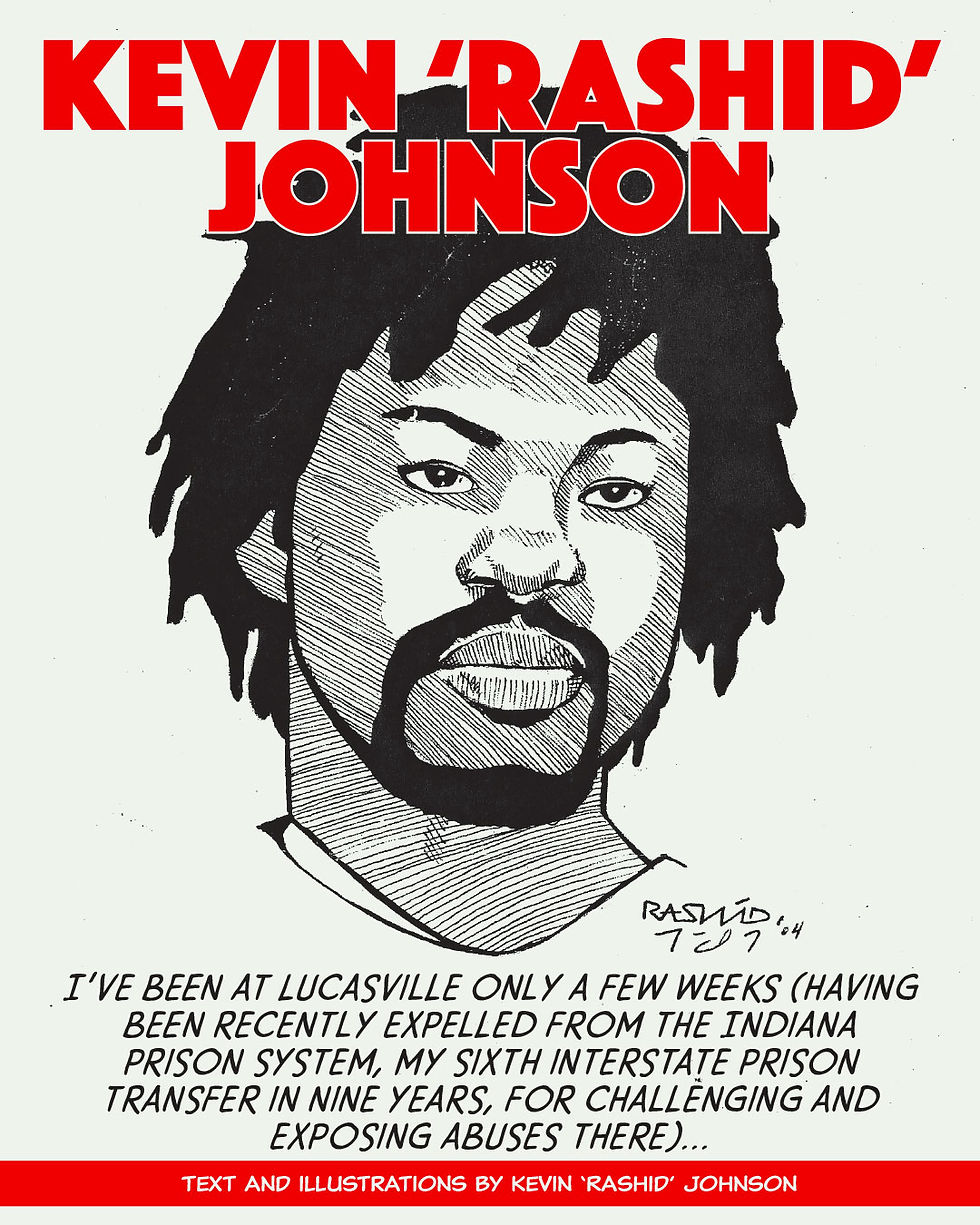
kevin “rashid” johnson is one of the most documented contemporary examples of interstate compact abuse as political warfare.
a revolutionary artist, theorist, and organizer, rashid has been:
transferred across multiple states (virginia, texas, oregon, indiana, tennessee and now currently in south carolina)
moved repeatedly in retaliation for grievances, lawsuits, and exposure of abuse
held in long-term solitary confinement
cut off from consistent family contact and legal continuity
these transfers were not responses to violence or escape attempts. they followed:
publication of political writings
legal victories against prison officials
organizing among captives
rashid’s case demonstrates how the icca functions as:
domestic human trafficking
punitive exile
a weapon against political speech
each transfer resets grievance processes, disrupts legal cases, and places the prisoner under unfamiliar regimes precisely the same logic used when enslaved rebels were sold to distant plantations to neutralize their influence.
icca as a tool of internal colonial control
these cases reveal a consistent pattern:
political consciousness triggers transfer
organizing triggers exile
legal resistance triggers displacement
the icca allows u.s. prison systems to treat new afrikan political prisoners as moveable property, rather than as people rooted in communities and histories of struggle.
this is not accidental. it is internal colonial governance, managing a captive population through forced movement, isolation, and labor extraction.
continuity of repression: from enslaved freedom fighters to political prisoners
across centuries, the pattern is unmistakable:
PLANTATION SLAVERY VS. MODERN PRISON SYSTEM
the icca is not a deviation from amerikkkan history—it is its continuation.
why the interstate compact must be abolished
the icca must be abolished because it:
violates basic human rights
functions as domestic human trafficking
reproduces plantation slavery under a legal disguise
targets new afrikan political consciousness
destroys families and communities
suppresses resistance and self-determination
profits from black captivity
reform is not enough. this system is structurally rooted in slavery and colonial domination. it cannot be humanized.
toward abolition and self-determination
the struggle against the icca is part of a broader fight against:
mass incarceration
prison slavery (13th amendment exception)
political repression
settler-colonial control over new afrikan life
abolishing interstate prisoner trafficking is a step toward:
community-based accountability
decarceration
recognition of political prisoners
new afrikan self-determination
conclusion
the interstate compact contract agreement is not an administrative inconvenience—it is a modern slave system, rooted in the same logic that once chained afrikans to plantations and sold rebels across state lines.
to oppose it is to stand in continuity with:
enslaved new afrikans
maroons
political prisoners
freedom fighters past and present
please stand with the shaka shakur freedom campaign, virginia shaka shakur freedom campaign and the new afrikan freedom campaign to abolish the interstate compact contract so no more families can be torn apart from their loved ones that are incarcerated.


Comments